Application Identification and Prioritization
Application recognition and prioritization are core features of both Business Connect and Enterprise Connect. Application prioritization determines the order in which application traffic moves through the network. It identifies the critical and non-critical traffic, queues it, and then delivers it across the network.
In many businesses, network experience can be significantly improved by application recognition and prioritization. Network traffic consists of data from a variety of applications. It mostly includes mission-critical applications like audio-video communication and collaboration tools (Zoom, Microsoft Teams, VoIP solutions). However, a few non-critical applications, like social media, might also be present in the traffic stream. It is difficult to maintain a high level of performance for critical applications without rules or network policies to prioritize business-critical applications over non-critical ones.
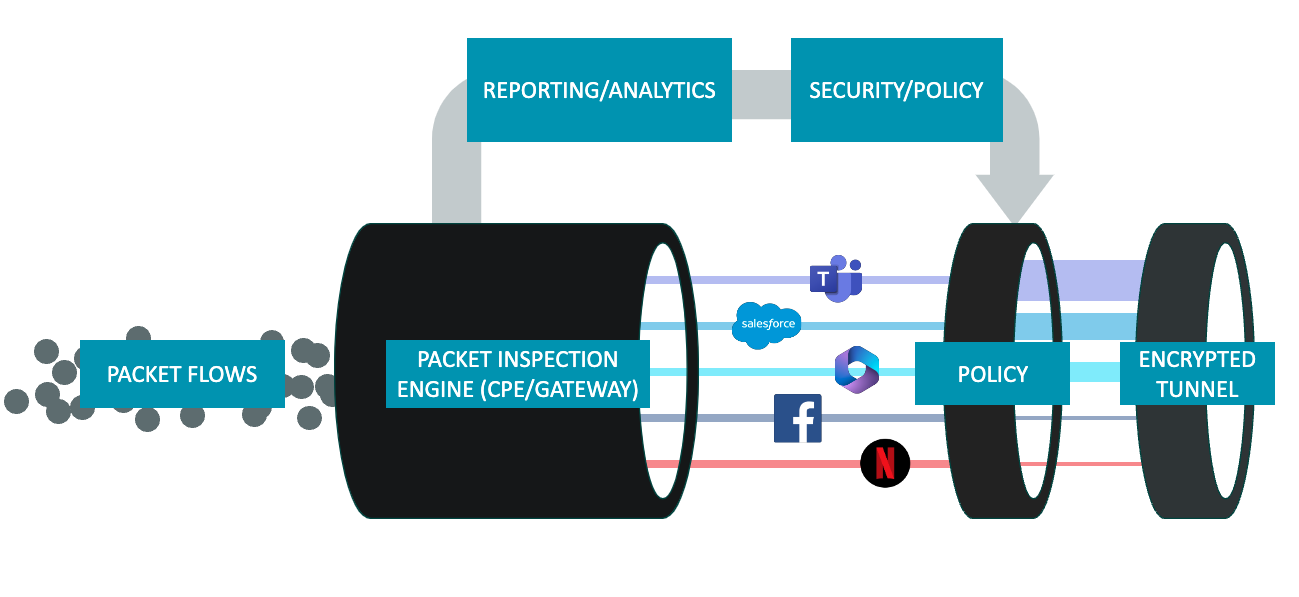
Application recognition uses packet inspection to identify, prioritize, steer traffic accurately and efficiently over the network as well as drop non-business traffic. The packet inspection engine provides data to help monitor and analyze critical application performance factors. Applications can be given a higher priority through application prioritization, ensuring that mission-critical applications' performance and quality of service (QoS) are unaffected by other applications' network traffic.
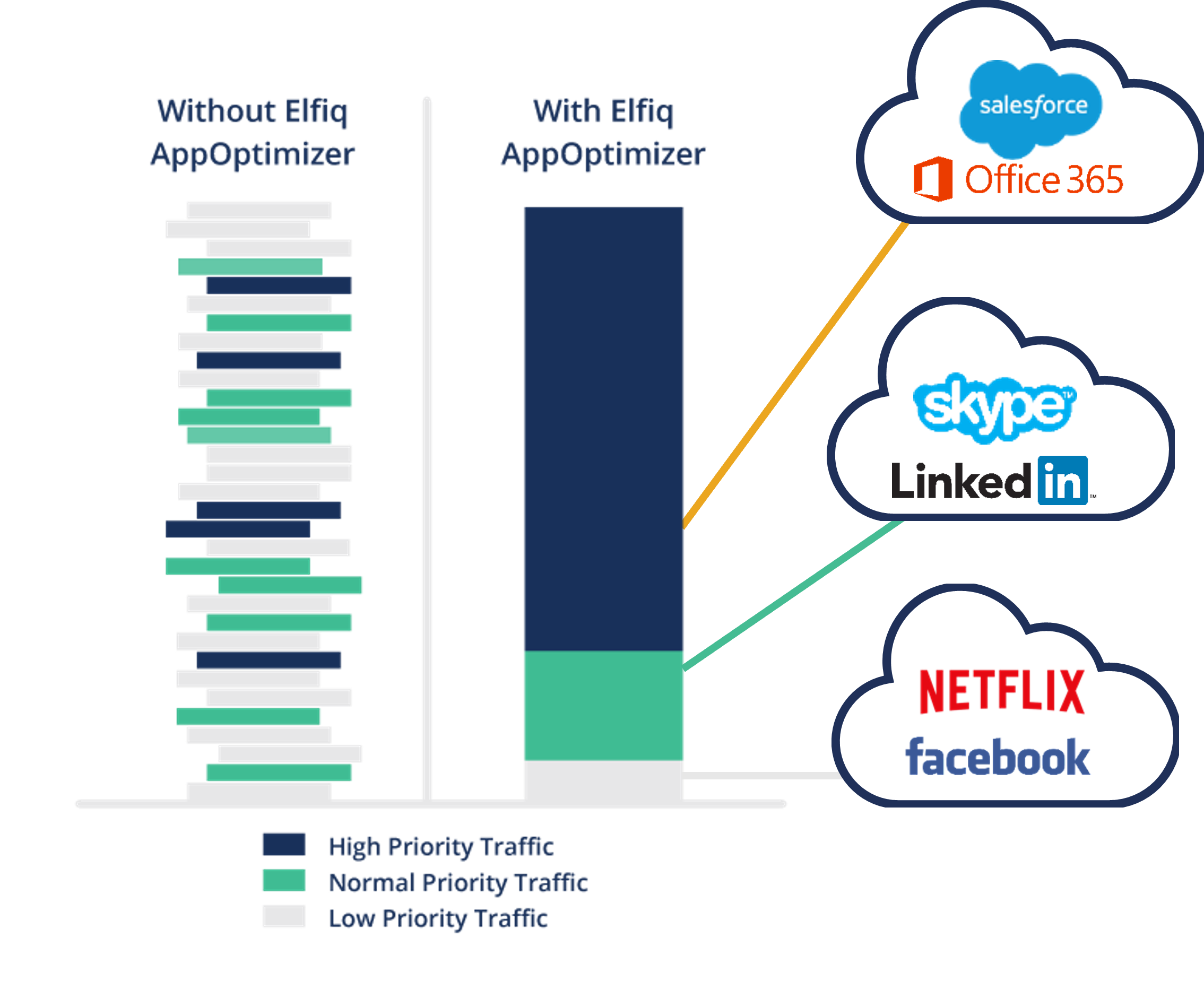
For examples of how application recognition and prioritization are beneficial features for businesses, see Application Recognition and Prioritization Business Use Cases.
TERMS OF USE | ANTI SPAM | PRIVACY POLICY | USER LICENSE AGREEMENT | PATENTS